
To extract pages from a PDF, select the pages you need in a PDF tool (ideally a local, in-browser extractor) and export them as a new PDF. No account needed, no file upload required. Below, we walk through the exact steps, show you how to keep your original file untouched, and cover privacy considerations before you extract anything sensitive.
TL;DR:
- Preview thumbnail selections before exporting, especially when choosing separated sections from a long file; password protection or corruption may require unlocking or repair first.
- Very large PDFs can strain browser memory, so close unused tabs or switch to desktop software if the browser slows or extraction fails.
- Choose a combined PDF for sharing or archiving, separate page files for distribution, and Word or JPG when editing or presenting the content.
- Batch extraction favors desktop software with scripting, while sensitive or regulated documents call for local handling, secure deletion, device encryption, and IT or legal review.
Table of Contents
- Step-by-Step: How to Extract Pages From a PDF
- Why Local, Browser-Based Extraction Matters
- Choosing the Right Output and Saving It Properly
- Privacy Considerations Before You Extract Sensitive Pages
- Extracting Pages Using Shortcuts and Batch Commands
- A Practical Take on When to Escalate
- Try FlowPDF: Extract Pages Locally Without Uploads or Watermarks
- FAQ
- Sources
Step-by-Step: How to Extract Pages From a PDF
Extracting pages works the same way in most tools, whether you're using a browser-based app or desktop software. Here's the sequence:
- Open your PDF in the extraction tool of your choice.
- Find the "Extract," "Split," or "Organize Pages" control, usually in the toolbar or sidebar.
- Select the pages you want, either by clicking individual thumbnails or typing page ranges (for example: 2, 4-6, 9).
- Preview your selection to confirm you have the right pages before exporting.
- Choose whether to combine the selected pages into one file or save them as separate files.
- Download the new file and check the filename and save location.
Most tools let you select pages visually, which cuts down on mistakes compared to typing ranges blind. If your file has 40 pages and you only need three sections, a visual thumbnail view saves you from miscounting.
Sometimes extraction doesn't go smoothly. Here's what usually causes it and how to fix it:
- Encrypted or password-protected PDFs often block extraction until you unlock the file first.
- Corrupted files may need a repair step before any tool can read them properly.
- Oversized files can slow down or fail in browser tools; a desktop app sometimes handles large files more reliably.
If you hit an error message that doesn't explain itself, try opening the file in a different viewer first. A file that looks fine in one app sometimes reveals a corruption issue in another.
Why Local, Browser-Based Extraction Matters
Local processing means your PDF never leaves your device, especially when you use offline private PDF tools designed for privacy-first users. The tool reads and edits the file directly in your browser's memory, then hands you the result, no server round-trip involved. Server-side tools work differently: they upload your file to a remote machine, process it there, and send back the output. That extra step is where most privacy concerns come from.
Here's what a local extraction looks like in practice, using FlowPDF's extract pages tool as an example:
- Open the file directly in your browser, no sign-up screen first.
- Select the pages you want using the visual page picker.
- Export your new PDF, which downloads straight to your device.
Pro Tip: Close other heavy browser tabs before extracting from a large PDF. In-browser tools lean on your device's memory, and a crowded browser can slow things down.
Local tools work in any modern browser, but very large files (several hundred pages or heavy image content) can use more memory than smaller documents. If your browser starts lagging, try closing unused tabs or switching to a lighter browser window. Local processing cuts out the transmission risk, though it's still worth keeping your own device locked down with a password and updated software.
Choosing the Right Output and Saving It Properly
Once you've selected your pages, you'll usually get a few output choices:
- Single combined PDF: best when you're archiving a report or sending a complete section to someone.
- Separate single-page PDFs: useful when each page needs to go to a different person or folder.
- Converted formats like JPG or Word: handy when you need an image for a presentation or editable text for revisions.
Pick the format based on what happens next. A page headed for printing works better as a high-quality PDF or JPG; a page you'll edit further makes more sense as a Word file.
Name your files clearly as you go, something like "contract_pages_3-5_2026" beats "download(2).pdf" when you're hunting for it later. Keep extracted files in a dedicated folder rather than your downloads folder, so you don't lose track of which version is current. If the extracted file feels unusually large, a quick compression pass keeps it easier to share by email.
Privacy Considerations Before You Extract Sensitive Pages
Before you run any document through an extraction tool, especially one with personal or business data, check a few things first:
- Does the tool upload your file, or does it process everything locally in your browser?
- What's the retention policy for any file that does get uploaded, and is it deleted automatically afterward?
- Who else might see the file during processing, including third-party servers the tool relies on?
Local processing is widely considered one of the more practical privacy controls available to individual users, since it removes the step where your file travels to a third-party server at all.
For organizations handling personal data, Singapore's Personal Data Protection Act requires reasonable security arrangements for how personal data gets collected, used, and stored. The PDPC's advisory guidelines frame this protection obligation around the handling and retention of personal data, and that responsibility doesn't disappear just because processing happens on a local device rather than a server. Practical steps that help: process sensitive files locally, securely delete downloaded outputs once you're done with them, and keep device-level encryption turned on.
Extracting Pages Using Shortcuts and Batch Commands
If you extract pages often, clicking through menus every time adds up. Most desktop PDF readers support keyboard shortcuts for common actions: selecting a page range, triggering an extract dialog, or saving the result, often bound to combinations like Ctrl+Shift+E or similar, depending on the software.
For batch work, where you need to pull the same page ranges from multiple files, look for a tool with a command-line interface or a batch-processing panel. Desktop PDF utilities sometimes include a scripting option that lets you specify a folder of PDFs and a page range, then run the extraction across every file at once. This beats opening each document individually when you're processing dozens of similar reports or forms.

Browser-based tools are generally built for one-file-at-a-time workflows rather than batch scripting, since they're designed around simplicity rather than automation. If your workflow calls for extracting the same ranges across many files regularly, a desktop tool with batch support will save you more time than repeating single-file steps in a browser. For occasional use, though, the extra setup a batch tool requires often isn't worth it.
A Practical Take on When to Escalate
A quick extractor is fine for personal documents or light business use, a contract excerpt, a tax form, a single chapter. Once you're handling large datasets or regulated personal data, loop in IT or legal before you proceed. Local processing cuts network exposure, but it's not a substitute for solid endpoint security. Keep an audit trail if you ever need to show how a sensitive document was handled.
— Ronald Ang
Try FlowPDF: Extract Pages Locally Without Uploads or Watermarks
We built FlowPDF around one idea: your documents stay on your device. Our extract pages tool runs entirely in your browser, no account, no watermark, no file sitting on a server somewhere.
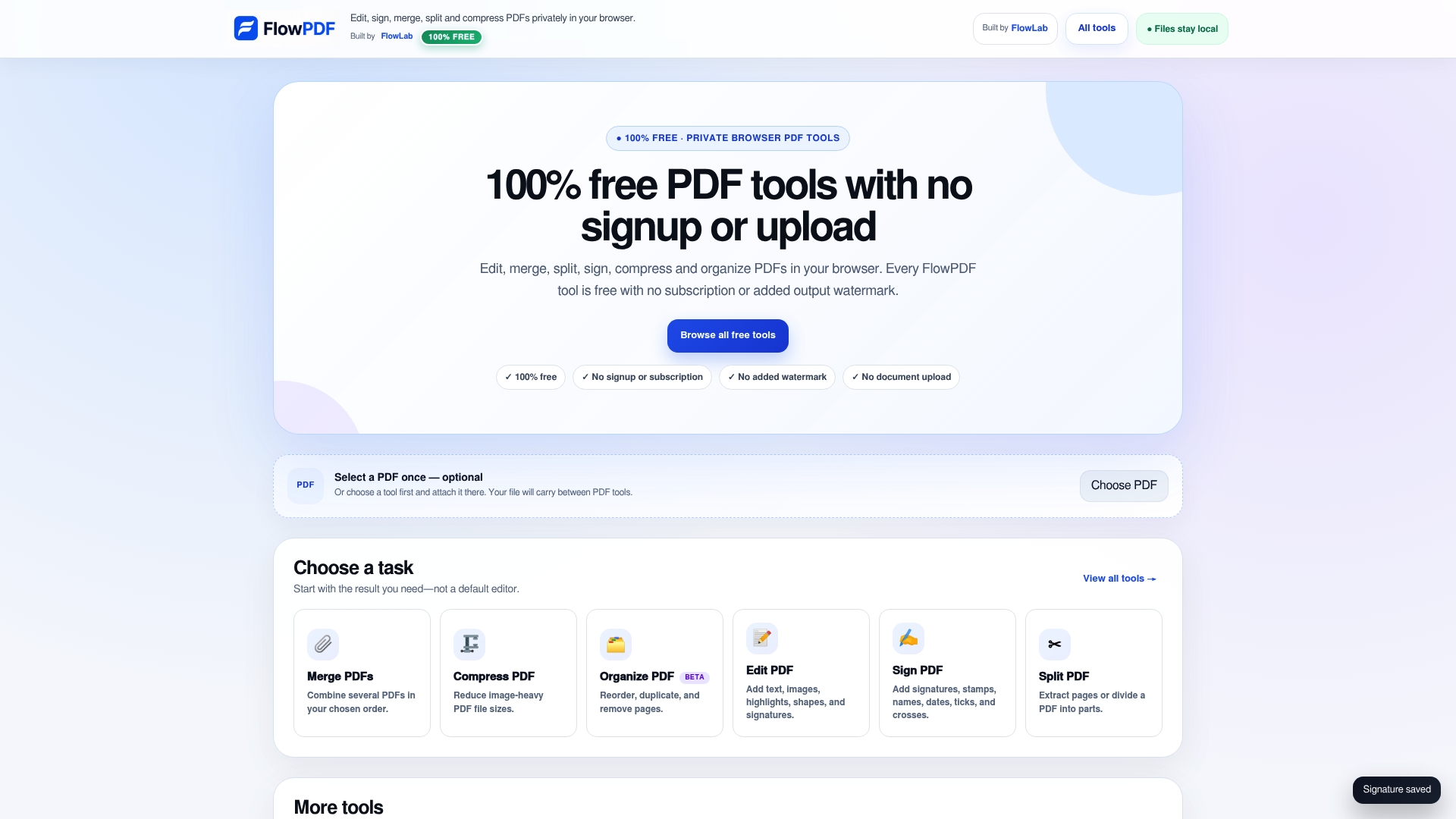
Using it takes three steps:
- Open your PDF in our extract pages tool.
- Select the pages you need and preview them before exporting.
- Download your new file directly to your device.
If you need related tools, our free PDF tools page covers merging, splitting, compressing, and more, all free, all local.
FAQ
How do I extract just certain pages from a PDF?
Open the file in an extraction tool, select the specific pages using thumbnails or page ranges, and export them as a new PDF. Most tools let you preview your selection before downloading, which helps catch mistakes before you save the file.
Why can't I extract pages from a PDF?
The most common blockers are password protection, file corruption, or a file size that exceeds the tool's limit. Unlocking the file, repairing it in another viewer, or switching to a desktop tool usually resolves the issue.
What does it mean to extract a page?
Extracting a page means copying one or more pages from an existing PDF into a brand-new file, leaving your original document untouched. It's different from removing or deleting pages, which edits the source file directly.
How do I separate pages out of a PDF file?
Use a tool's "split" or "extract" feature to select the pages you want, then choose whether to save them as one combined file or as separate single-page files. FlowPDF's extract pages tool handles both options directly in your browser without uploading the file.
Sources
- Advisory guidelines on key concepts in the Personal Data Protection Act
- Personal Data Protection Act 2012 - Singapore Statutes Online