
If you know the PDF's password, open it and strip the protection with that password, either in your reader's security settings or with a local tool. If the file opens without a password but blocks editing or printing, clear the owner permission flags instead, ideally with a tool that works locally like FlowPDF Unlock. Only do either when you own the file or have permission to change it.
TL;DR:
- Removing restrictions on a password-protected PDF requires the password or owner permission flags, which are handled differently depending on the security model.
- Clearing permission flags is easier than removing open passwords and can be done locally with tools like qpdf, but signature validity may be affected.
- Circumventing the PDF lock without authorization risks legal violations unless performing permitted activities such as accessibility conversion or preservation under specific regulations.
- If a PDF asks for a password to open, there is generally no legal or technical workaround without obtaining that password from the owner.
- Processing a PDF locally in trusted tools ensures privacy and control, especially when handling sensitive documents with restrictions.
Table of Contents
- Check what kind of restriction your PDF has
- Method 1: Remove restrictions when you already know the password
- Method 2: Lift permission restrictions when there's no open password
- Legal caution: when removing a lock crosses a line
- Advanced scenarios: signatures, encrypted opens, and batch jobs
- FlowPDF walkthrough: unlock locally without uploading anything
- Author perspective: a short responsible-use summary
- Try FlowPDF for your next PDF task
- FAQ
- Sources
Check what kind of restriction your PDF has
Not every locked PDF is locked the same way, and the fix depends entirely on which type you're dealing with.
A PDF that demands a password before it even opens uses a user (open) password. A PDF that opens freely but won't let you copy text, print, or edit uses owner permission flags instead, according to a practical distinction between the two security models. Mixing these up wastes time, since a tool built to strip permission flags won't open an encrypted file that genuinely needs a password.
To check your file:
- Open it in Adobe Acrobat Reader and look under File > Properties > Security.
- In Preview on a Mac, check File > Get Info for security details.
- Run
qpdf --show-encryption yourfile.pdffrom a command line to see the exact encryption and permission settings.
If the file demands a password just to open, you need that password. If it opens but restricts actions, you're dealing with permission flags, which are usually far easier to clear.
Method 1: Remove restrictions when you already know the password
When you have the password, removing restrictions is mostly a matter of entering it correctly and saving a clean copy.
- Open the PDF in your reader and enter the password when prompted.
- Go to the security or protection settings and choose to remove or change the password.
- Save the file as a new copy, keeping your original untouched.
- Test the new copy by printing a page and copying a line of text to confirm restrictions are gone.
For a browser-based option that processes the PDF locally in your browser, removes the password, and lets you download a clean version without uploading anything to a server, see FlowPDF Unlock. Desktop tools like Acrobat Pro work too, though they often require a paid license for this step.
Pro Tip: Always keep the original encrypted file as a backup before removing protection, in case you need to prove the document's original state later.
Watch for a few snags. Digital signatures sometimes break when a protected PDF is re-saved, so check signature validity after unlocking. Some readers also gray out the "remove security" option if the PDF was created with a restricted editing permission set at the application level rather than through standard password protection, in which case you may need a different tool entirely to open and re-export the file.
Method 2: Lift permission restrictions when there's no open password
Plenty of PDFs open instantly but still block copying, printing, or form-filling. That's owner-level permission enforcement, and it behaves differently from a true password lock.
Permission bits, sometimes called the P field, are flags inside the PDF that tell compliant readers which actions to allow. According to qpdf's documentation, these flags are enforced by the software reading the file, not by unbreakable cryptography, which is why a tool capable of opening the file can usually also disregard or clear those flags.
To clear permission flags locally:
- Run
qpdf --decrypt input.pdf output.pdfif the file has no open password, which strips the permission restrictions entirely. - Use a browser-local unlocker that processes the file on your device rather than a server.
- Reopen the new file and confirm printing, copying, and editing now work as expected.
Because permission enforcement lives in the reader software rather than the encryption itself, qpdf's documentation notes that clearing these flags is a routine technical operation, not a cryptographic workaround.
Web-based unlockers carry real trade-offs. Uploading a sensitive contract or medical record to a third-party server means you lose control over who has a copy, and some online tools strip redactions or shift formatting during conversion. For anything sensitive, a local tool that never leaves your device is the safer route.

If the file still won't budge after a permission-flag clear, you're likely looking at genuine encryption rather than a simple permission flag, and the password is required. In that case, the right move is asking the sender for an unprotected copy or requesting accessible format directly from whoever holds the rights.
Legal caution: when removing a lock crosses a line
Clearing a PDF's protection is not automatically allowed just because it's technically possible. Singapore law treats access-control circumvention as a general prohibition, with only narrow carve-outs.
The Copyright (Access Control Measures — Prescribed Exceptions) Regulations 2024 set out specific circumstances where circumventing an access-control measure is permitted, such as enabling text-to-speech or converting a document into an accessible format for someone with a print disability. Preservation, research, and certain repair activities fall under similarly narrow exceptions.
Outside those defined cases, the general rule is that breaking a digital lock without authorization is not permitted. In practice, that means:
- Only remove restrictions from files you own or have explicit permission to modify.
- If you're doing accessibility work, document which exception applies before proceeding.
- When in doubt, ask the rights holder for permission or request an already-accessible copy rather than circumventing the lock yourself.
Advanced scenarios: signatures, encrypted opens, and batch jobs
A few edge cases trip up even careful users, and it's worth knowing them before you start.
- If a PDF requires a password just to open and you don't have it, there's generally no legitimate way around this. Password recovery tools exist, but they're slow, often unreliable, and sit outside the scope of standard restriction removal.
- Removing restrictions or re-saving a signed PDF can invalidate the digital signature, so always verify signature status after any change, before you rely on the document as proof of anything.
- When processing many files at once, run a handful through first and manually check printing, copying, and signature validity before trusting the whole batch.
FlowPDF walkthrough: unlock locally without uploading anything
Here's the flow we built for exactly this situation, when you're authorized to edit a file and want it handled on your own device.
- Open FlowPDF Unlock in your browser and select your PDF.
- If you know the password, enter it; if the file opens freely but blocks actions, FlowPDF clears the permission flags directly.
- Download the unlocked copy. Nothing is uploaded to a server at any point.
- From there, you can jump straight into editing or redacting the same file without re-exporting it elsewhere.
Pro Tip: If you're extracting sensitive pages after unlocking, redact first and verify the redaction is permanent before sharing the file onward.
This local-first approach fits naturally when you're handling contracts, personal records, or any document where sending a copy to an unfamiliar server feels like an unnecessary risk.
Author perspective: a short responsible-use summary
Removing a PDF's restrictions is a practical skill, but it's worth treating with the same care as unlocking a filing cabinet. Only do it on files you're authorized to change, and keep a record of that authorization if the document matters later. Processing locally isn't just a privacy preference, it also means you're not creating a second copy of a sensitive file sitting on someone else's server.
— Ronald Ang
Try FlowPDF for your next PDF task
There are tools available that let you unlock, edit, redact, or reorganize a PDF entirely in your browser, with no upload, no signup, and no watermark on the result.
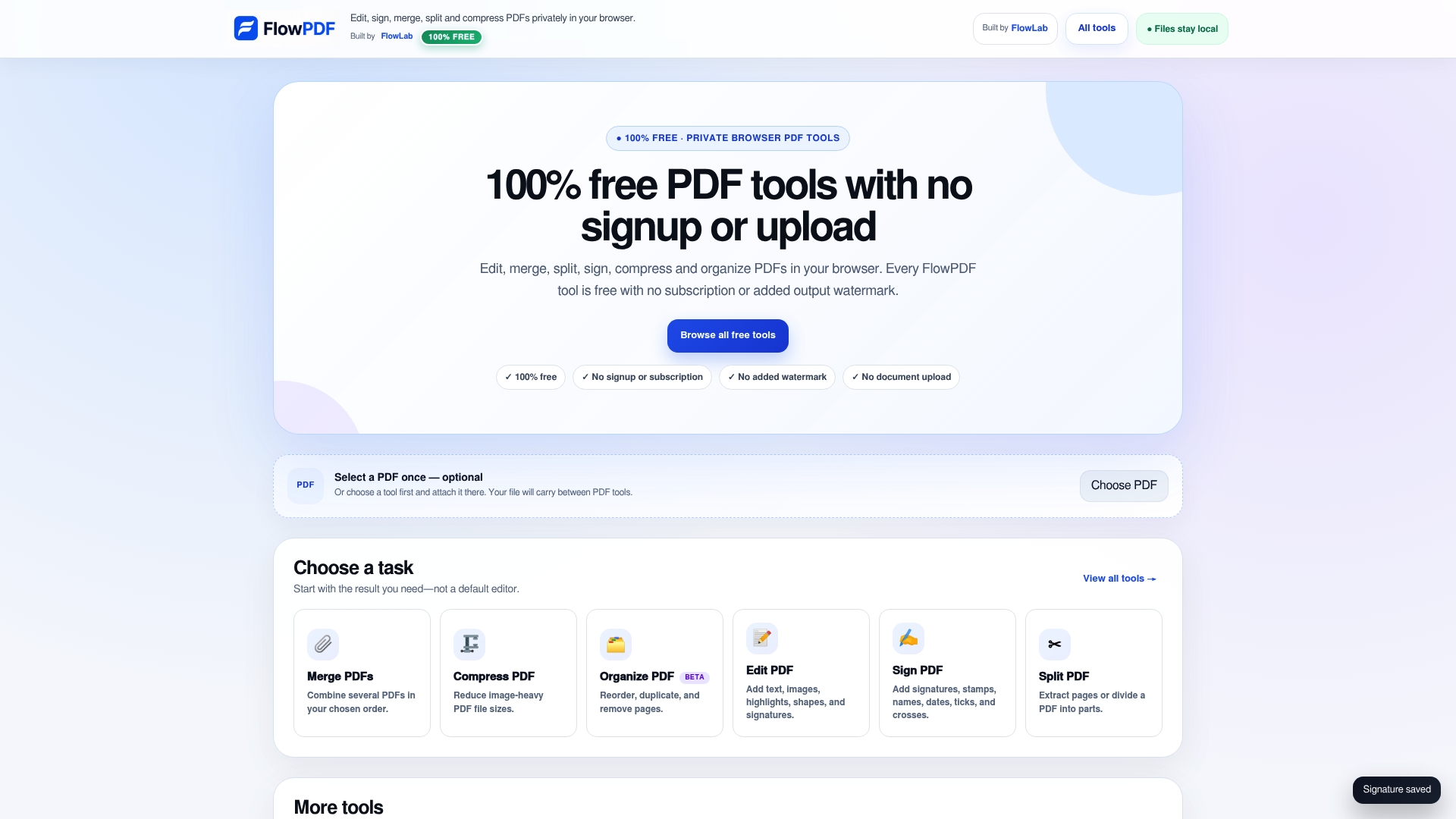
Whether you're removing a known password, clearing permission flags, or cleaning up a document before sharing it, our free PDF tools cover the full workflow in one place, starting at FlowPDF.
This article is general information, not a substitute for advice from a qualified lawyer. Consult a qualified legal professional about your own circumstances before acting on anything here.
FAQ
What's the difference between a user password and an owner password?
A user password blocks the PDF from opening at all until you enter it, while an owner password allows the file to open but restricts actions like printing, copying, or editing. Knowing which one you're facing determines whether you need the exact password or can clear permission flags instead, as explained in this practical breakdown.
Is it legal to remove restrictions from a PDF?
It depends on who owns the file and why you're removing the lock. Singapore's prescribed exceptions regulations permit circumvention only in narrow cases like accessibility conversion, preservation, or research, so outside those situations you generally need the owner's permission.
Can I remove PDF restrictions without uploading the file anywhere?
Yes, tools that process files locally in your browser, such as FlowPDF Unlock, never send your document to a server. This avoids the privacy and redaction risks that come with some online unlockers.
Will removing restrictions break a digital signature?
It can. Re-saving a signed PDF after removing its protection sometimes invalidates the signature, so verify signature status immediately after unlocking before treating the document as final.
What if I don't know the PDF's open password?
If the file requires a password just to open it and you don't have it, there's no reliable way to bypass that requirement. Your best options are requesting the password or an accessible copy directly from whoever created or sent the file.
Sources
- Copyright (Access Control Measures — Prescribed Exceptions) Regulations 2024 — Singapore Statutes Online
- PDF Encryption — qpdf documentation
- PDF security explained: passwords, permissions, encryption, and digital signatures — Text Control blog