
The fastest way to delete PDF pages is a browser based tool like our remove pages tool, which processes files locally with no upload. Mac users can do it natively through Preview, mobile users through a dedicated app, and anyone handling repeat batch jobs can automate it with qpdf. Whichever method you pick, keep a copy of the original file until you confirm the result.
TL;DR:
- A local browser tool can remove scattered pages in one pass without sending sensitive files to a server or leaving questions about storage.
- Preview removes annotations on deleted pages, so check comments, highlights, and signatures first, then verify bookmarks and internal links after saving.
- For repeat jobs, qpdf builds a new PDF from pages you specify to keep; outlines and bookmarks may not transfer automatically, so inspect navigation.
- Mobile apps suit quick, low stakes edits, but check permissions and reviews before opening sensitive documents; use local browser or desktop processing for confidentiality.
- Keep the original until the export opens correctly, and test it in another viewer because rendering problems may appear only outside the editing app.
Table of Contents
- Delete pages using an online browser tool
- Delete pages on macOS using Preview
- Delete pages with qpdf for batch or repeat jobs
- Delete pages on mobile (apps and quick tips)
- Practical checks and pitfalls after deleting pages
- Why choose a privacy focused in-browser tool to remove pages
- Quick, private PDF edits as everyday productivity
- Try FlowPDF to remove pages privately and for free
- FAQ
- Sources
Delete pages using an online browser tool
An online page remover is the quickest option when you need to drop a few pages and move on. Our remove pages tool runs entirely in your browser, which means your file never leaves your device.
Here is the typical flow:
- Open the tool and load your PDF directly from your device.
- Select the pages you want to remove using thumbnails or page numbers.
- Confirm the deletion and preview the remaining pages.
- Download the new PDF and check it before deleting the original.
Local processing matters here. When a tool uploads your file to a server, you lose visibility into how long it's stored or who can access it. Browser based tools skip that step entirely, so sensitive contracts, medical forms, or financial statements never leave your machine.
Most page removers also let you select noncontiguous pages or full ranges in one pass, so you don't need to repeat the process for scattered pages. If the tool offers an undo option before you finalize the download, use it to double check your selection.
Pro Tip: Rename your exported file (like "contract_v2.pdf") so you don't confuse it with the original while you verify the edit.
Online tools work best for one off edits. If you're processing the same type of document repeatedly, a desktop workflow or command line approach will save more time in the long run.
Delete pages on macOS using Preview
If you're on a Mac, you don't need any extra software. Preview, the app built into macOS, handles page deletion natively and works offline.
- Open your PDF in Preview.
- Go to View, then choose Thumbnails or Contact Sheet.
- Click the page (or pages) you want to remove.
- Press Delete, then save or export the file under a new name.
One detail worth knowing: Apple's own documentation confirms that annotations on a deleted page are removed along with that page. If you've added comments, highlights, or signatures to a page, deleting it wipes those out too, so check for important markup before you confirm.
Take extra care if you're editing a reviewed or signed document.
After editing, skim through bookmarks and internal links to make sure nothing points to a page that no longer exists. Preview is the better choice when you want speed, privacy, and don't need batch processing.
Delete pages with qpdf for batch or repeat jobs

For anyone scripting repeatable PDF edits, qpdf is a reliable command line tool. Instead of thinking in terms of "delete these pages," qpdf works by specifying which pages to keep, which is a safer mental model for batch work.
A basic approach:
- Identify the full page range of your source file.
- Use the
--pagesoption to list only the ranges you want to retain, skipping the ones you don't. - Run the command to generate a new PDF containing just those pages.
According to qpdf's documentation, the --pages option assembles a new file from selected ranges across one or more source documents, which makes it well suited to repeatable or automated jobs. Document level features like outlines and bookmarks may not carry over automatically, so verify navigation after the operation. Choose qpdf when you're processing many files the same way; choose an interactive tool when you're editing one document by hand.
Delete pages on mobile (apps and quick tips)
Mobile apps make page deletion possible without opening a laptop. The general steps are consistent across most apps:
- Open the app and load your PDF from storage or cloud.
- Switch to thumbnail view to see all pages at once.
- Tap to select the pages you want removed.
- Delete, then export or share the updated file.
Before editing anything sensitive on your phone, check the app's permissions and reviews. Mobile app listings describe thumbnail based editing but vary in how they handle your data, so it's worth a quick look at what access the app requests. Mobile editing works well for quick, low stakes tasks. For anything confidential, a local browser tool or desktop app gives you more control over where your file actually goes.
Practical checks and pitfalls after deleting pages
A page delete seems simple, but a few things can break without you noticing right away.
- Confirm that annotations or comments on the removed pages are actually gone, and that this matches what you intended.
- Test bookmarks, internal links, form fields, and any signatures to make sure they still point to the right place.
- Keep the original file until you've fully verified the edited version opens correctly and nothing important is missing.
- For batch jobs, consider switching your approach to specify pages to keep rather than pages to delete, since it's easier to get right the first time.
Pro Tip: Open the exported file in a different viewer than the one you used to edit it. Rendering issues sometimes only show up in a second app.
Local processing tools can also struggle with encrypted or malformed PDFs, so if your export looks off, try a desktop tool that can repair or decrypt the file first.
Why choose a privacy focused in-browser tool to remove pages
We process every file locally in your browser, which means your PDF never touches a server when you use our remove pages tool. That matters most when you're handling something you wouldn't want sitting on someone else's storage, like a signed agreement or a medical record.
- Your document stays on your device from start to finish.
- No upload step means no waiting and no exposure while a file transfers.
- Core editing tools, including page removal and reordering through an organize PDF feature, are free with no watermark and no signup.
- You can move straight from deleting pages to cropping, merging, or compressing without switching tools.
For anyone who edits PDFs regularly, keeping the process local removes one more thing to worry about.
Quick, private PDF edits as everyday productivity
In practice, most page deletions come from ordinary moments: trimming a scanned notebook, pulling a confidential page before sharing a report, or fixing a signed contract. We'd point sensitive files toward local browser tools, quick one off Mac edits toward Preview, and repeat jobs toward qpdf.
— Ronald Ang
Try FlowPDF to remove pages privately and for free
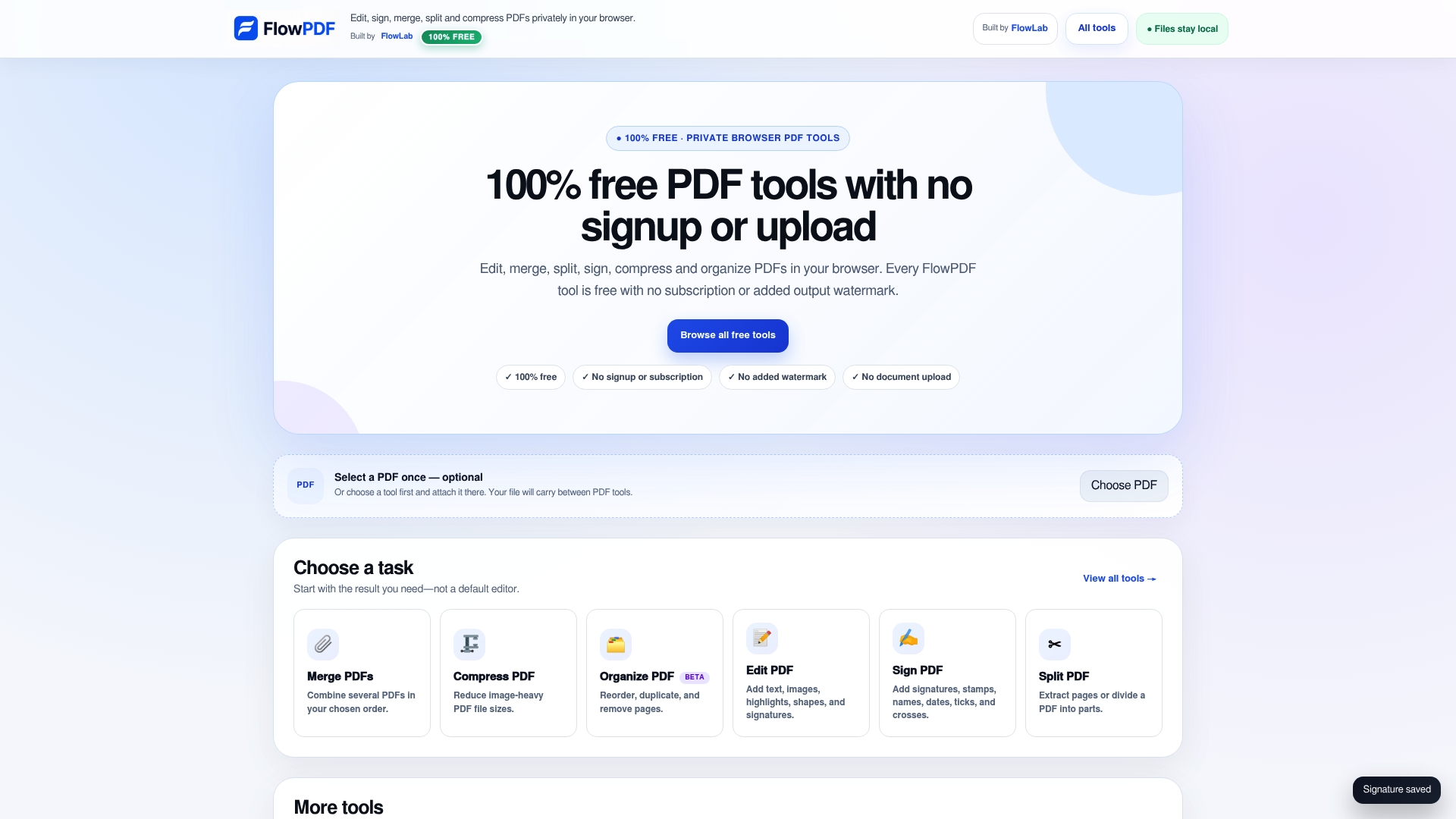 We keep page deletion simple: open our remove pages tool, select the pages you don't need, delete them, and download your file, all without an upload or a signup. It's one part of a wider free PDF toolkit that covers merging, compressing, cropping, and more.
- Open the tool and load your PDF from your device.
- Select the pages to remove using thumbnails.
- Delete and download the updated file in seconds.
You can keep your document exactly where it belongs: on your own device.
FAQ
How can I delete certain pages from a PDF file?
Open your PDF in a page removal tool, select the specific pages using thumbnails or page numbers, then delete and export the file. Our remove pages tool handles this locally in your browser, or you can use Preview on a Mac for the same result without extra software.
Where can I merge PDF files online for free?
You can combine multiple PDFs into one file using a browser based merge tool that doesn't require an upload. Our merge PDF tool processes files locally and is free to use with no signup.
How can you edit a PDF file?
PDF editing covers tasks like adding text, rotating pages, cropping, watermarking, or removing content, and most of these can be done directly in a browser without installing software. Our edit PDF tool supports these changes locally, so your document stays on your device throughout.
How do I remove pages from a PDF file using an online tool?
Upload or open your file in a browser based page remover, select the pages you want gone using the thumbnail view, then confirm the deletion and download the result. Tools that process files locally, like our remove pages tool, skip the server upload step entirely, which keeps the process faster and more private.
Sources
For deeper technical detail, Apple's Preview guide covers native page deletion on Mac, and qpdf's documentation explains command line page selection for batch jobs.