Encrypt the PDF or share it through an end-to-end encrypted link, then send the password through a separate channel like a text message or phone call. That single habit blocks the two most common leak points: an intercepted email and a password sitting right next to the file it unlocks. If your recipient can't handle encrypted files, fall back to a password-protected zip archive and read them the password over the phone.
TL;DR:
- Use file-level encryption with AES-256 and a strong, unique password to secure PDFs before sending, and test the password beforehand on a separate device.
- Share encrypted files via secure cloud links with expiration dates and access controls, or deliver passwords through separate, secure channels like phone or encrypted messaging.
- Opt for end-to-end encrypted email when both sender and recipient use compatible services, especially for sensitive conversations, to prevent message decryption during transit.
- Remove hidden metadata and true redact all sensitive content within the PDF to prevent data leaks before encrypting and sharing the file.
- Choose the most appropriate method based on sensitivity and recipient capability, and always revoke access or reissue files if a link or password is compromised.
Table of Contents
- What Are the Best Ways to Send a PDF Securely?
- How Do You Password-Protect and Encrypt a PDF Before Sending?
- When Should You Use Encrypted Email Instead of a Password-Protected File?
- How Do Secure Cloud Links Compare to Email Attachments?
- Are Encrypted Archives and PGP a Better Option for Sensitive Files?
- What Hidden Data Should You Remove Before Sending a PDF?
- How Should You Share the Password Without Undermining the Encryption?
- Quick Checklist Before You Hit Send
- Author Perspective: Why Local Processing Changes the Security Math
- Prepare Your PDF Locally Before You Send It
- Sources
What Are the Best Ways to Send a PDF Securely?
Five practical methods cover almost every situation you'll run into, from a quick tax form to a client contract with financial details attached.
- Password-protect the PDF itself. File-level encryption locks the document so it's unreadable without a password, even if someone else gets the file.
- Use end-to-end encrypted email or messaging. Services built around E2EE keep the content unreadable to anyone but the sender and recipient, including the provider.
- Share a secure cloud link with password and expiration. This keeps the file off the public internet and lets you cut off access later.
- Send an encrypted archive (ZIP or 7z). Useful when the file is too large for email or the recipient's software can't open a protected PDF directly.
- Deliver the password through a separate, secure channel. A phone call, an SMS, or an encrypted chat message works. Never reuse the same email thread.
Each method solves a slightly different problem. Picking the right one comes down to how sensitive the document is and what your recipient can actually open.
How Do You Password-Protect and Encrypt a PDF Before Sending?
File-level encryption is the fastest way to add real protection to a document you're about to send, and it takes less than a minute once you know where to click.
- Open the PDF in a tool that supports encryption, then find the "Protect" or "Encrypt" option.
- Set an open password (required to view the file) and, if the tool allows it, a separate permissions password that restricts printing, copying, or editing.
- Choose AES-256 encryption if it's offered. Older PDF encryption standards (40-bit or 128-bit RC4) are still technically "password protected" but can be cracked far faster than AES-256.
- Save the file, then reopen it yourself to confirm the password actually works before you send it.
Password strength matters more than people assume. A four-digit numeric password on an AES-256 file is still weak, because the encryption algorithm can't compensate for a guessable password. Aim for a strong password mixing letters, numbers, and symbols to improve security.
Most modern PDF readers, including Adobe Acrobat Reader, Apple Preview, and Chrome's built-in viewer, open AES-encrypted PDFs without issue. Warn recipients ahead of time that a password prompt is coming, especially if they're on an older mobile PDF app that might choke on AES-256.
File-level protection alone is usually enough for medium-sensitivity documents, like an invoice or a signed agreement, if the file also travels through a secure channel to a known recipient. You can protect a PDF with a local password tool before it ever leaves your device, so the unprotected version never touches an inbox or a server. For anything involving medical records, financial account numbers, or legal case files, layer in an encrypted link or E2EE email on top.
Pro Tip: Test the password yourself on a second device before sending. A typo in the password field is the single most common reason a "secure" PDF turns into a support headache two hours later.
When Should You Use Encrypted Email Instead of a Password-Protected File?
End-to-end encryption means the message is scrambled on your device and only decrypted on the recipient's device. Nobody in between, including the email provider, can read it. That's different from standard TLS encryption, which protects the message in transit but leaves it readable once it lands in the provider's servers.
- If both you and your recipient use an E2EE provider, the message and attachment stay encrypted the entire trip.
- If your recipient uses a normal email account, look for a password-protected email feature (several providers offer this even for non-E2EE recipients) so the content is still locked behind a separate password.
- Favor E2EE over plain file-level encryption when the conversation itself, not just the attachment, is sensitive, such as discussing legal strategy or medical details in the email body.
The catch: E2EE generally requires both sides to use compatible services, or at least a shared password-protected email feature. And even encrypted attachments sitting in an inbox for years are a risk. Security guidance from the Singapore Police Force points out that attackers who compromise an email account can dig through old sent folders, so leaving sensitive PDFs parked in your Sent items indefinitely defeats the point of encrypting them in the first place.
How Do Secure Cloud Links Compare to Email Attachments?
A secure cloud link keeps the file off the open internet entirely. You upload it once, set access controls, and share a link instead of an attachment.
- Upload the PDF, then set a password on the link, an expiration date, or a specific list of allowed email addresses, depending on what the platform supports.
- You can revoke the link at any time, which is impossible once an email attachment has already landed in someone's inbox.
- Large files that would bounce off an email server's size limit move through a link without issue.
Before trusting a provider, check for a few specifics: does it encrypt metadata as well as content, can you set both a password and an expiration, is there a download limit, and does it offer zero-knowledge encryption so the provider itself can't view your file? Proton Drive supports passworded, expiring links with client-side encryption, and services built around zero-knowledge architecture add audit trails that show exactly when a link was opened.
A secure link is usually the best option when the file is large, when you want the ability to cut off access later, or when you're sending to someone whose email security you can't vouch for.
Pro Tip: Set the shortest expiration window that's realistic for the recipient's timeline. A link that dies in 48 hours is far less useful to an attacker than one that stays live for 30 days.
Are Encrypted Archives and PGP a Better Option for Sensitive Files?
For technically comfortable recipients, encrypted archives and public-key encryption offer stronger protection than a password-protected PDF alone.
- Create an AES-256 encrypted ZIP or 7z archive around the PDF using a tool like 7-Zip, and set a password separate from any password on the PDF itself.
- If your recipient has a published public key, use PGP or GPG instead. The file is encrypted with their public key, and only their private key can decrypt it, eliminating the need to share a password at all.
- Weigh the trade-off: PGP is significantly harder for a nontechnical recipient to set up than opening a password-protected PDF.
- Whichever route you choose, pick a password with real entropy, not a birthday or a pet's name, and deliver it through a channel separate from the file.
PGP's real advantage is that it removes shared passwords from the equation entirely, which also protects against a compromised email account being used to intercept a password sent earlier in the same thread.
What Hidden Data Should You Remove Before Sending a PDF?
A PDF carries more than what's on the page. Metadata (author name, company, edit history), leftover comments, form field data, and even OCR text layers from a scan can all ride along invisibly.
- Metadata often includes the original file path, author name, and software version, which can reveal more than you intend.
- Visual redaction (a black box drawn over text) is not the same as true redaction. If the underlying text layer isn't deleted, copying and pasting the "redacted" area can still reveal it.
- Strip metadata and confirm true redaction with a tool built for the job, then reopen the file to verify the sensitive content is actually gone, not just hidden.
- Combine redaction with encryption. Removing hidden data doesn't protect the file in transit, and encryption doesn't strip metadata that was already baked in.
A local redaction tool that permanently deletes the underlying content, rather than just painting over it, is worth using before any sensitive PDF leaves your device.
How Should You Share the Password Without Undermining the Encryption?
Sending an encrypted PDF and then typing the password into the same email thread cancels out most of the protection you just added.
- Send the password by phone call, SMS, or an encrypted chat app, never through the same channel that carried the file.
- Confirm you're talking to the right person with a quick out-of-band check, like calling a number you already had on file rather than one just sent to you.
- For repeated exchanges with the same person, a shared password manager entry or a one-time PIN sent via encrypted messaging cuts down on reused or weak passwords.
- If you suspect a password or link was intercepted, revoke the link immediately and reissue both the file and the password through fresh channels.
Pro Tip: If you're sending sensitive files to the same person regularly, agree on a standing verification phrase over the phone once. It turns "is this really you?" into a five-second check instead of a guessing game.
Quick Checklist Before You Hit Send
Match the method to the situation, then run through this before the file leaves your device:
- High sensitivity (financial, medical, legal) → encrypted link or E2EE, password sent separately.
- Recipient can't open encrypted files → password-protected ZIP archive, password delivered by phone.
- File too large for email → secure cloud link with expiration, not an attachment.
- Link expired or password lost → revoke and reissue rather than resending the same one.
- Antivirus blocking the file → check if it's flagging the archive format, not the content, and try an alternate delivery method.
Author Perspective: Why Local Processing Changes the Security Math
Most people trade privacy for convenience without realizing it. Every PDF tool that requires an upload puts your document on someone else's server, even briefly, and that's one more place it can be logged, cached, or exposed. Local processing removes that step entirely. The file never leaves your device until you deliberately send it, which is a meaningfully different security posture than "trust the cloud provider's privacy policy." Local password protection and redaction tools fit squarely into that workflow: prepare the file safely, then choose how to send it.
— Ronald Ang
Prepare Your PDF Locally Before You Send It
Every method in this guide starts the same way: get the file into shape before it leaves your computer. This step can be handled entirely in your browser, with no upload required, so the unprotected version of your document never touches a server.
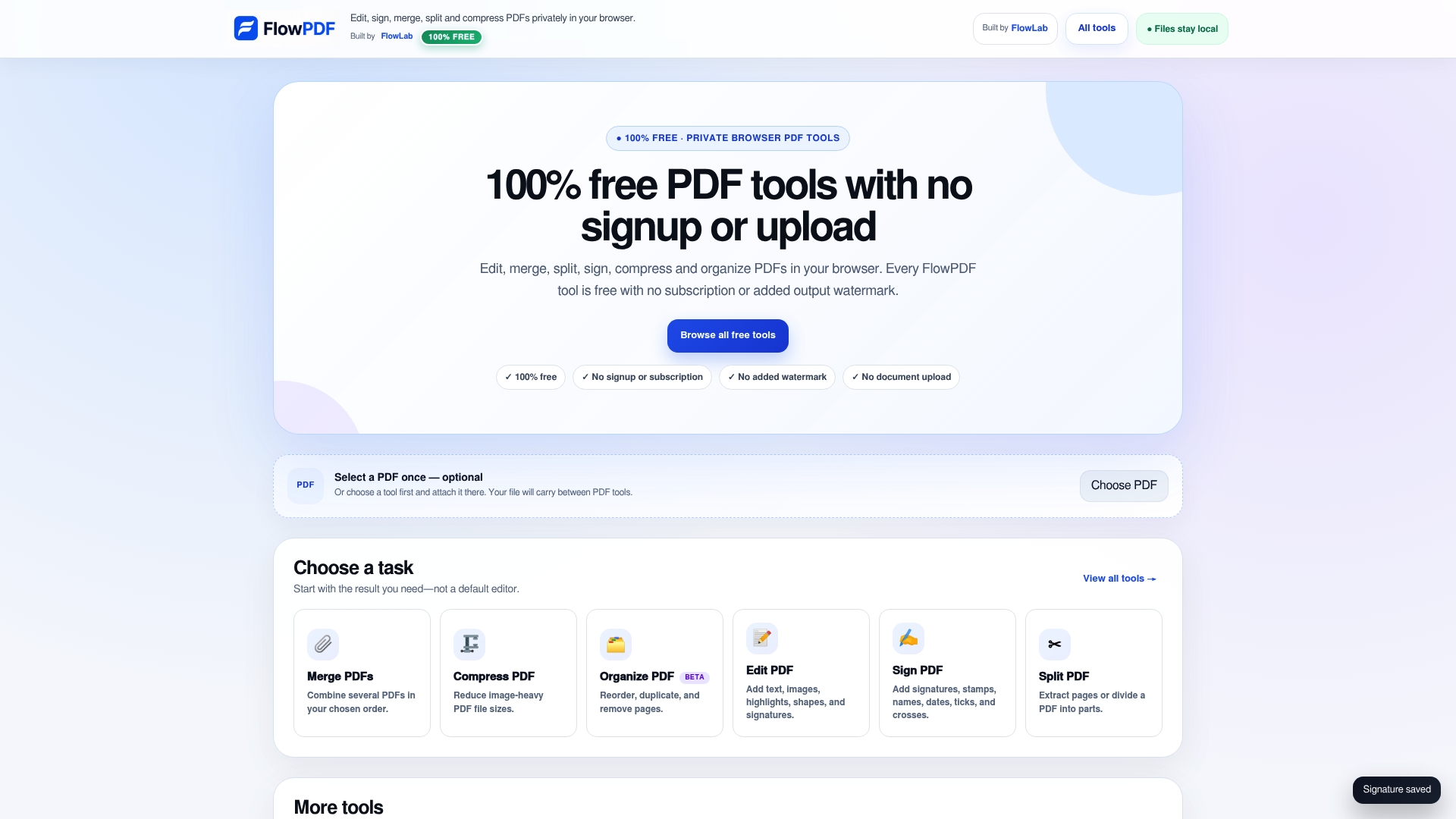
You can password-protect a PDF locally, redact sensitive content permanently, or compress a large file so it fits an email size limit, all without creating an account or paying for a subscription. If you're preparing documents for a law firm or accounting workflow, the approach outlined in SzopaLabs' guide to PDF chat tools for professional offices pairs well with this kind of local prep work. Once your PDF is encrypted or redacted, pick your sending method from the list above and go. Start with the FlowPDF toolset the next time you need to protect a file before it leaves your inbox.