
The fastest way to replace text in a PDF is with an in-browser editor that changes the actual text layer, not a conversion workaround that rebuilds the file in Word. Some in-browser PDF editors do this locally, so your document never leaves your device. Scanned or image-based PDFs are the one exception. Those need OCR first, since there's no text layer to edit until the scan is converted into recognizable characters.
TL;DR:
- Text replacement in PDFs is fastest and most reliable when editing the existing text layer directly, especially with local in-browser tools.
- OCR is necessary for scanned or image-based PDFs before performing find-and-replace, and OCR accuracy depends on the scan quality.
- Browser-based editors are ideal for quick, one-off edits, while desktop software is better suited for batch processing or layout-heavy adjustments.
- Ensuring the editor preserves the original font and layout prevents mismatched fonts or misaligned text after editing.
- FlowPDF offers private, local editing without uploading files to a server, making it suitable for sensitive documents like contracts and personal records.
Table of Contents
- How Do You Find and Replace Text in a PDF Online?
- What if the PDF Is a Scan? Do You Need OCR?
- Should You Use a Desktop App, Browser Tool, or Phone for This?
- How Do You Keep Formatting Intact After Editing PDF Text?
- How Does FlowPDF Edit PDF Text Locally in Your Browser?
- When Should You Edit in the Browser vs. on Desktop?
- Try FlowPDF for Private, No-Upload Text Replacement
- Useful Sources and Further Reading
How Do You Find and Replace Text in a PDF Online?
Most in-browser PDF editors follow the same basic pattern, and once you've done it once, it takes under a minute for a short document. The key difference between tools is whether they edit the existing text layer or just paste a new text box on top of the old one. You want the former.
Here's the workflow that works across most modern editors:
- Open the PDF in the editor. Look for whether the tool processes the file locally in your browser or requires an upload to a server. Local processing matters more than people realize, especially for contracts, medical records, or anything with a client's name on it.
- Use Find to locate every instance of the text you want to change. Review each match before touching anything. A "find all" pass often turns up an extra occurrence hiding in a footer or a table cell.
- Choose Replace for a single instance or Replace All if the change should apply everywhere. Some editors let you restrict the operation to a page range, which is useful when the same word appears in a section you don't want touched.
- Download the result and open it as a new file, not as a replacement for your working copy. Check fonts, spacing, and page breaks before you send it anywhere.
- Keep the original untouched. Always edit a duplicate.
Pro Tip: Run one small test replacement first, even if you plan to change ten instances of a phrase. It takes ten seconds and tells you immediately whether the tool preserves your formatting or mangles it.
If you're working with something sensitive, like a settlement agreement or a signed lease, prefer a tool that processes files locally rather than sending them to a remote server for editing.
What if the PDF Is a Scan? Do You Need OCR?
Find and replace only works on a document with a text layer. A scanned page, a photographed receipt, or a PDF exported as a flat image have no text layer at all. They're just pictures of words. Your editor can't search for something it can't read as text.
To make a scanned PDF editable, you need Optical Character Recognition (OCR) first. The workflow looks like this:
- Run OCR on the file to convert the image into a searchable text layer.
- Check the recognized text carefully. OCR accuracy drops on low-quality scans, unusual fonts, or handwriting, and a misread character early on can throw off a batch replacement later.
- Make your text replacements once the recognition looks accurate.
- Re-export and check that the visual layout still matches the original scan.
If privacy matters for the document, weigh your OCR options carefully. Some tools run recognition locally, others process it in the cloud, and if you use a cloud-based OCR service, delete the uploaded file afterward rather than assuming it disappears on its own.
Should You Use a Desktop App, Browser Tool, or Phone for This?
The right platform depends less on the document and more on how often you're doing this and how complex the fix is.
- Browser-based editors work best for quick, one-off fixes: a name change, a date update, a single typo across a few pages. No installation, no waiting, and they work the same whether you're on a Mac, a Chromebook, or a work laptop.
- Desktop apps earn their place when you're batch-editing dozens of files or fixing layout issues that ripple across a document, like a font substitution that shifted every paragraph down half a line.
- Mobile editors are fine for a single-line correction on a form you're about to email, but trying to fix formatting on a phone screen is asking for trouble. Move to a laptop for anything beyond a quick patch.
If you start on your phone and realize the edit needs more room to work, save the file to cloud storage or a messaging app you trust and finish on a bigger screen. Switching mid-task is normal. Just make sure you're editing the same version you started with, not an older copy.
How Do You Keep Formatting Intact After Editing PDF Text?
The single biggest predictor of a clean edit is whether your tool changes the existing text layer instead of stacking a new text box over the old one. Overlay-style edits are why so many "edited" PDFs end up with visibly mismatched fonts or text that floats slightly off the original baseline.
A few habits will save you from most of the common headaches:
- Check for font substitution after any edit. If your replacement text renders in a generic fallback font instead of the original, look for an option to embed fonts before exporting.
- When your replacement text is longer or shorter than the original, expect some reflow. Some editors resize the text box automatically; others need you to manually adjust tracking or line breaks to avoid overlap.
- Review headers and footers separately. A "replace all" for a name or date can quietly change a running header you never scrolled up to check.
- Always keep an untouched copy of the original file before you start.
Pro Tip: Zoom to 100% and scroll the entire document after any bulk replacement, page by page. It's tedious, but it's the only way to catch a page-break shift or a stray overlap before you send the file out.
If your edit adds a lot of new text, you may also need to adjust page layout afterward. Cropping or reorganizing pages can fix a document that no longer flows cleanly.
How Does FlowPDF Edit PDF Text Locally in Your Browser?
FlowPDF handles the entire edit inside your browser tab. There's no upload step, which means the file never touches an outside server while you're editing PDF text online privately. For a contract, a lease, or anything with someone else's personal information on it, that distinction is worth caring about.
Beyond text replacement, the same toolkit covers the tasks that usually surround an edit like this:
- Editing existing text directly in the PDF's layout
- Redacting sensitive information permanently, not just visually covering it
- Merging or splitting files before and after edits
- Compressing the finished document for easier sharing
- Filling out and saving form fields
- Removing pages you no longer need
A typical use case looks like this: you have a service contract template and need to swap one client's name for another's across six pages. You'd open the file, run Find on the old name, review each match to confirm there's no false positive (a company name that happens to contain the same word, for instance), then replace each instance and check that the signature block and header still line up correctly before exporting.
Local processing means the document doing the editing never leaves the device doing the editing. That's the whole privacy model in one sentence, and it's why freelancers handling client contracts and small businesses handling employee paperwork tend to favor this approach over uploading files to a random web tool.
When Should You Edit in the Browser vs. on Desktop?
In-browser tools handle almost everything a normal person needs: a wrong date, a misspelled name, a clause that needs updating before you send a contract back. Reach for desktop software only when you're fixing a document with heavy custom formatting or processing a batch of files that would take forever one at a time. If you're doing layout-heavy work regularly, something built for that job, like book formatting software, makes more sense than forcing a quick-edit tool to do it.
Test every edit on a duplicate file first, not your only copy. It costs nothing and it means a bad replacement never becomes a permanent problem.
— Ronald Ang
Try FlowPDF for Private, No-Upload Text Replacement
FlowPDF is the alternative to uploading your contracts, forms, or personal records to a random web tool just to fix a typo. Because the editing happens locally in your browser, your file stays on your device the entire time, and there's no watermark stamped across the result or a subscription wall blocking the feature you actually need.
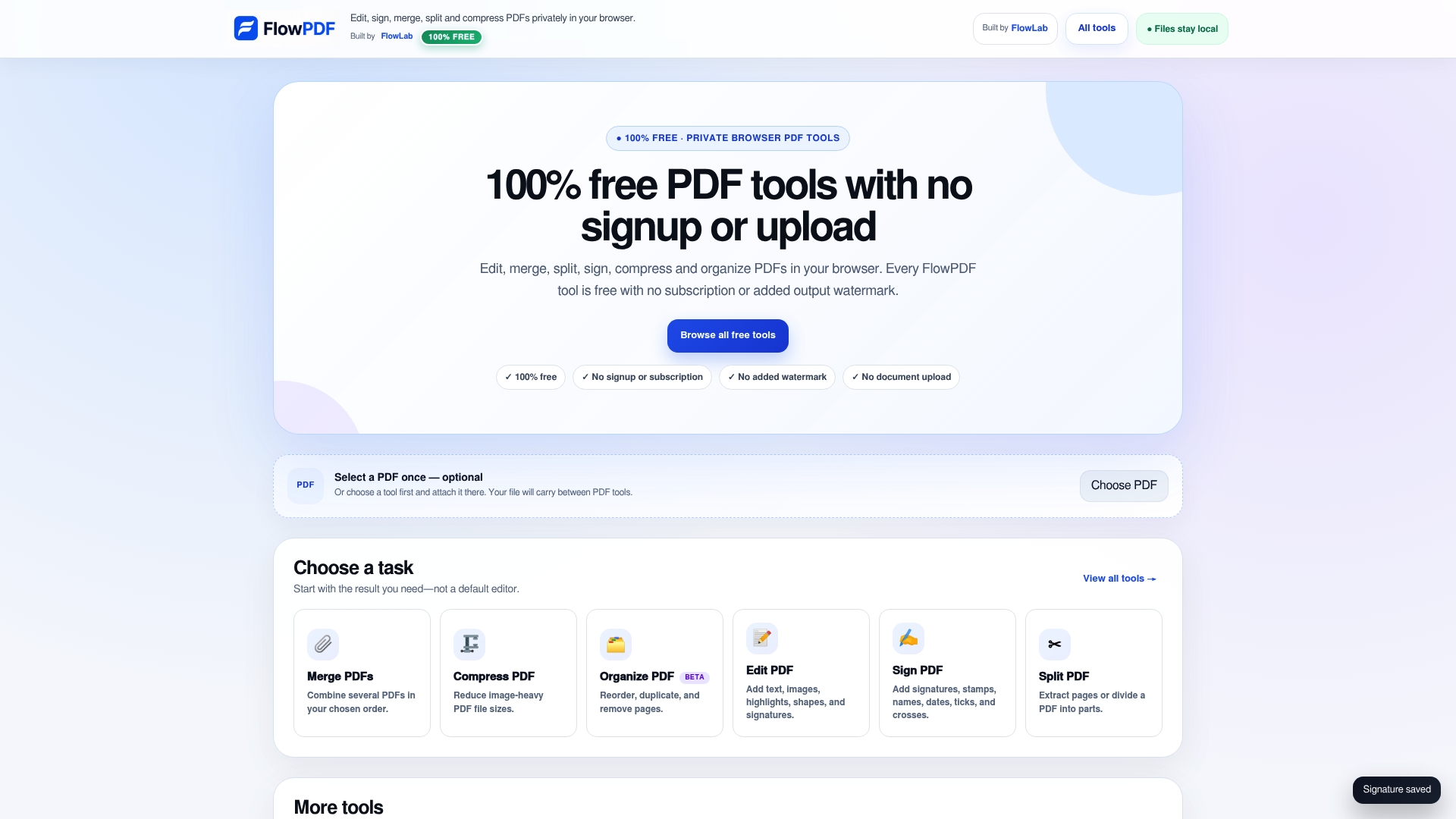
If you've got a PDF sitting in your downloads folder with a name, date, or line of text that needs changing, open a copy of it now and run your first replacement. Once you're done, the same toolkit handles merging, compressing, and organizing whatever comes next in that document's life.
Useful Sources and Further Reading
For more on how local processing protects your files during editing, see how FlowPDF processes PDFs locally. To explore the full toolkit, visit FlowPDF's free PDF tools, or check rotating PDF pages for quick layout fixes after an edit.