
Your best first move is a local-processing PDF editor that can open the file and strip the watermark layer directly, since it keeps your document private and preserves text quality. Use targeted object-level removal for technical or batch cases, and reach for AI cleanup only when the PDF is a flattened scan with no editable layer to work with.
TL;DR:
- Removing watermarks from editable PDFs offers the cleanest results by deleting actual layers rather than repainting pixels, ensuring text remains clear.
- XObject-targeted removal is the highest-fidelity technical method, effectively deleting embedded watermark objects without affecting underlying content.
- AI inpainting can struggle with dense text or flattened scans, often blurring or inventing pixels, making it less reliable for text-heavy or non-editable files.
- Local-processing tools keep files on your device, avoiding privacy risks inherent in cloud-based services that upload sensitive documents to external servers.
- Always obtain permission before removing a watermark to avoid legal risks, and verify the watermark is fully gone by zooming in and checking OCR results and metadata.
Table of Contents
- Which watermark removal approach should you use?
- Why some PDFs are harder to fix than others
- Step-by-step workflows for common PDF types
- How to keep your documents private during removal
- What to check legally before you remove a watermark
- Why FlowPDF fits this workflow
- A practical note on getting this right
- Try the local-processing tools built for this
- Sources
- FAQ
Which watermark removal approach should you use?
The right method depends on how your PDF was built, not on which tool has the flashiest name. Before you open anything, match your file type to the approach below.
- Edit-layer removal works best for editable PDFs and gives the cleanest results, since you are deleting an actual layer rather than repainting pixels.
- XObject or object deletion is the highest-quality technical fix for embedded watermarks, and it keeps the underlying text and images intact.
- AI or object inpainting helps with flattened scans, but it can blur fine detail or invent pixels where the watermark used to be, according to PixelBin's review of AI watermark removers.
- Programmatic libraries suit batch jobs and advanced control, though they come with a higher technical cost since they usually require some coding familiarity.
Pick the simplest option that matches your file. A single scanned contract does not need a script, and a thousand-page batch job does not need to be done by hand.
Why some PDFs are harder to fix than others
A watermark usually sits on its own layer, either as an annotation or as a small embedded object called an XObject. Standard PDF editors can select that layer and delete it without touching the text or images underneath, which is why edit-layer removal looks so clean on editable files.
XObjects matter because they are self-contained, reusable elements. Deleting the specific XObject that holds the watermark leaves the rest of the page structure untouched, which is why developers and technical teams treat XObject-targeted removal as the highest-fidelity method available.
AI inpainting works differently. It analyzes the pixels around the watermark and tries to reconstruct what should be there, which works reasonably well on photos but struggles on dense text, where a single misread character can distort a whole sentence.
You can usually tell your PDF is flattened or scanned if you cannot select or copy the text, or if running OCR on it produces garbled results. That single check tells you which workflow below to follow.

Step-by-step workflows for common PDF types
Match your file to one of these three paths, then confirm the result before you move on.
- Editable PDF: open the file in a PDF editor, go to Watermark, choose Remove, then save a new copy and confirm the underlying text still selects and copies cleanly.
- Protected PDF: confirm you have permission to edit it, try a "print to PDF" pass only when that permission is clear, or request a clean master copy from the original owner instead.
- Scanned or flattened PDF: run OCR first, try an XObject-targeting tool if any watermark tiles remain as objects, and treat AI cleanup as a last resort for stubborn visual artifacts.
Whichever path you take, keep the original file untouched, check the document metadata for leftover identifiers, and scan the final pages for faint outlines the naked eye might miss.
Pro Tip: Zoom to 200% and check the page corners and margins, since that is where partial watermark artifacts tend to survive a first cleanup pass.
How to keep your documents private during removal
Cloud-based watermark removers ask you to upload your file to a server you do not control, and once it is there, you are relying on someone else's retention policy and someone else's staff not to look at it. That is a real exposure risk for contracts, medical records, or anything with a client's name on it.
Local-processing tools, whether they run entirely in your browser or as offline desktop software, avoid that risk by keeping the file on your own device the entire time. Nothing leaves your machine, so there is nothing for a third party to retain or misuse.
If a cloud tool is genuinely your only option, read its privacy policy first, look for a stated retention window, confirm it describes secure deletion, and avoid uploading anything you would not want stored indefinitely.

What to check legally before you remove a watermark
A watermark often exists precisely to signal copyright, ownership, or a limit on how a document can be shared, so removing one without permission can carry real legal risk, not just a formatting inconvenience. Small-business legal guidance on this point is direct: get permission before you remove a watermark, and keep a written record of it, whether that is an email thread or a signed note from the document's owner.
When permission is unclear, the safer path is to request a clean master copy rather than stripping the mark yourself. Laws on this vary by jurisdiction, so for anything commercial or high-stakes, a quick check with a legal professional is worth the time before you touch the file.
Why FlowPDF fits this workflow
FlowPDF processes every PDF task locally in your browser, so your file never leaves your device during any of the steps above. That matters most for the editable-PDF workflow, where you can open the Edit PDF tool, remove the watermark layer, and save without ever creating an uploaded copy on someone else's server.
For protected files where you already hold the password, the Unlock PDF tool handles that step locally as well. Once you have a cleaned file, the Redact PDF tool covers any remaining sensitive content, and it is worth a pass over the document's metadata afterward to confirm no hidden identifiers survived the process. The features are free with no signup required, which keeps the whole workflow contained to your own browser tab from start to finish.
A practical note on getting this right
The most common mistake is skipping the original backup and editing the only copy you have, which leaves no way back if a removal pass damages the text. The second is trusting AI cleanup on a text-heavy page without checking the result against the source.
Test on a duplicate file first, and always compare the OCR output before and after your cleanup pass.
— Ronald Ang
Try the local-processing tools built for this
You can run this entire workflow without uploading a single file, and without hitting a paywall halfway through. FlowPDF keeps every step, from editing to redaction to unlocking, on your own device, so a sensitive contract stays exactly that: yours, not a server's.
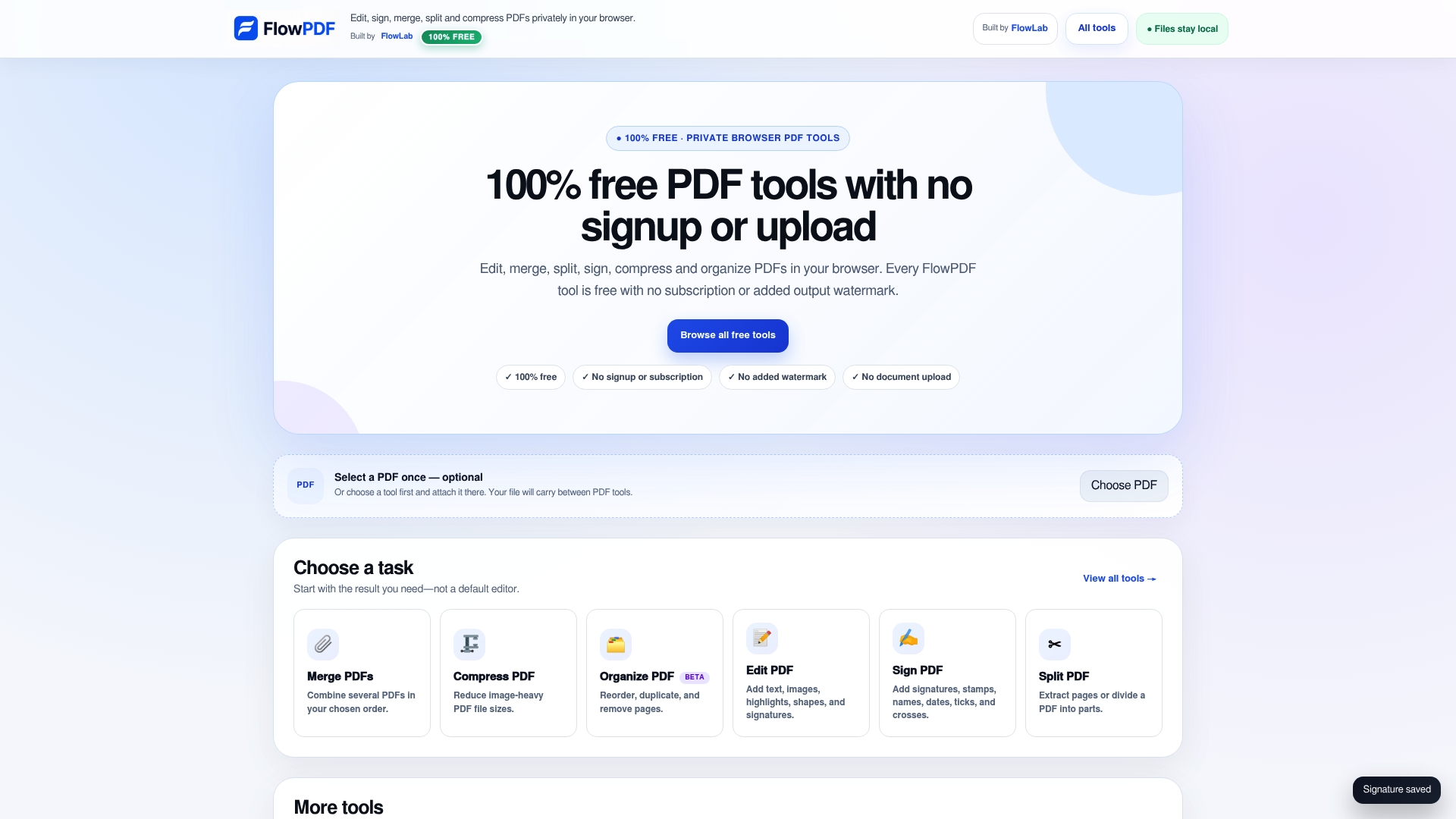
Start with these pages depending on your file type:
- Edit PDF for editable files where you need to remove a watermark layer directly.
- FlowPDF Free tools to see the full list of local, no-upload features in one place.
If you get stuck on a specific file type, the tool pages themselves walk through each step as you go.
Sources
- PixelBin — AI PDF watermark remover discussion
- GroupDocs — Remove XObjects/text formatting from PDFs (technical tutorial)
- Chron — How to remove a watermark in Acrobat (legal/permission guidance)
This article is general information, not a substitute for advice from a qualified lawyer. Consult a qualified legal professional about your own circumstances before acting on anything here.
FAQ
Can you remove a watermark from a PDF for free?
Yes, several browser-based editors let you delete a watermark layer at no cost, particularly on editable PDFs where the mark sits on its own object. Scanned or flattened files usually need an extra OCR or AI cleanup step, which some free tools also support.
Is it legal to remove a watermark from a PDF?
It depends on whether you own the document or have permission from whoever added the mark, since a watermark often signals copyright or distribution limits. Small-business legal guidance recommends getting and documenting permission before removing one, and consulting a legal professional for commercial cases.
Why does watermark removal sometimes blur the text?
This usually happens with AI-based inpainting tools working on scanned or flattened pages, where the software reconstructs pixels instead of deleting an actual layer. Reviews of AI watermark removers note this risk is highest on text-heavy documents.
How do I check that a watermark is fully gone?
Zoom into the page margins and corners, run OCR again to confirm the text reads cleanly, and check the file's metadata for any leftover identifiers. Comparing the cleaned file side by side with the original at high zoom catches most residual artifacts.
What is the best way to handle a password-protected PDF watermark?
If you already know the password, a local tool like FlowPDF's Unlock PDF removes the protection first so you can edit the file locally afterward. Without the password, request a clean copy from the document's owner rather than trying to bypass protection you are not authorized to remove.